PRONOBIS: A Robotic System for Automated Ultrasound-Based Prostate Reconstruction and Biopsy Planning
The first scientific paper published as part of the PRONOBIS project has now appeared in the journal MDPI Robotics. Titled PRONOBIS: A Robotic System for Automated Ultrasound-Based Prostate Reconstruction and Biopsy Planning, the study presents a next-generation robotic platform designed to improve the precision and efficiency of prostate cancer diagnostics.

The PRONOBIS system focuses on one of the key challenges in prostate biopsy procedures: accurately identifying the prostate and planning needle trajectories using ultrasound imaging alone. The researchers developed a robotically assisted solution that combines advanced ultrasound scanning with deep learning algorithms for automatic prostate segmentation and 3D reconstruction. This allows clinicians to generate a more detailed model of the prostate in real time, supporting better-targeted biopsy planning. By relying solely on ultrasound, the system aims to provide a more accessible and cost-effective alternative to workflows that depend on MRI imaging, while still improving targeting accuracy. The integration of robotics also has the potential to reduce operator variability and create more standardized procedures across clinical settings.
The publication marks an important milestone for the PRONOBIS project, demonstrating early research results and validating the project's technological direction. As development continues, the team expects the platform to contribute to safer, faster, and more reliable prostate cancer diagnosis and treatment planning.
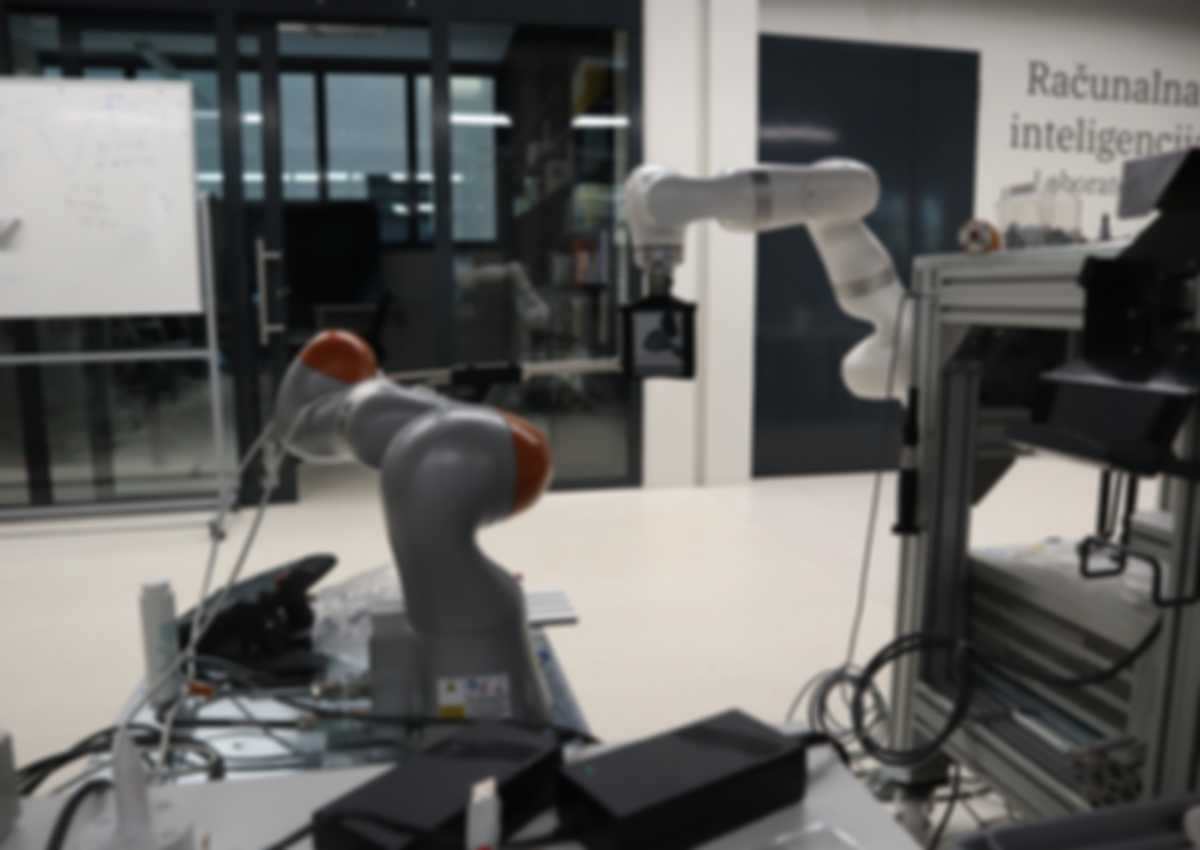
Our prototype for the robotic prostate biopsy solution.