Challenge
Healthcare systems across Europe, including Croatia, are facing major challenges in diagnosing and treating prostate cancer - one of the most common malignant diseases in men. The growing need for timely and accurate diagnostic procedures, coupled with an increasing shortage of specialist doctors, is creating significant pressure on the sustainability and efficiency of healthcare.
Solution
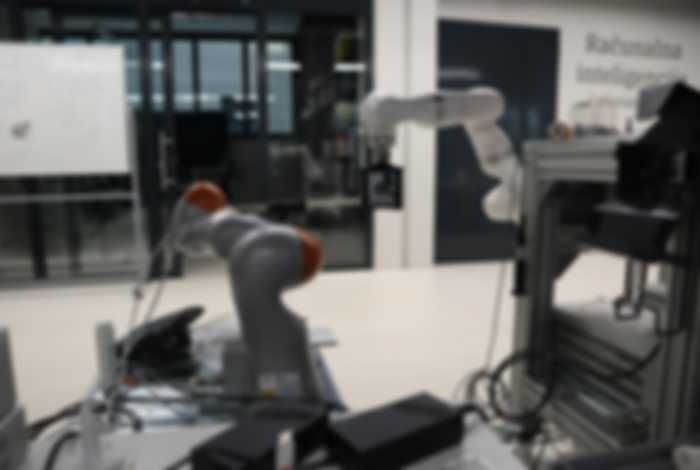
The answer to this challenge is a project aimed at developing a collaborative and intelligent robotically assisted prostate biopsy system, which uses the latest advances in robotics, artificial intelligence and machine learning algorithms. The aim of the project is to improve the precision, efficiency and safety of the diagnostic procedure, while reducing the burden on doctors and enabling a faster and more reliable diagnosis for patients.
Collaboration
The project brings together a multidisciplinary team of experts from the Faculty of Mechanical Engineering and Naval Architecture (FSB), the Faculty of Medicine (MEF) and the company Ronna Medical. Together, they conduct targeted research and develop technological solutions that meet the current needs of the healthcare system, while respecting all regulatory and ethical standards.



Objectives
Development of a laboratory prototype for robotic-assisted biopsy, enabling precise targeting of suspicious prostate regions.
Benefits and Impact
Healthcare institutions — reduced costs and the ability to perform biopsies outside the operating room
Urologists — faster training, increased precision, and shorter biopsy procedure times
Medical device manufacturers — opportunities to develop innovative, market-competitive equipment
Patients — less invasive, safer, and more effective procedures, leading to improved treatment outcomes

Information
- Project code: NPOO.C3.2.R3-I1.04.0181
- Implementation period: 01.07.2024. - 30.6.2026.
- Total project amount: 1,536,550.52 EUR
- EU co-financing of the project: 1,400,442.38 EUR
- Project coordinator: University of Zagreb, Faculty of Mechanical Engineering and Naval Architecture
- Partners: RONNA MEDICAL d.o.o. and University of Zagreb, Faculty of Medicine
- Project lead: assoc. prof. Marko Švaco
Learn about the project
Explore the specific areas of our project. From initial research phase to robot control and AI imaging.